
You may already know that an unhealthy diet can contribute to diseases such as diabetes, heart disease, stroke, and cancer. And most of us know that to feel our best, we should adhere to a healthy diet. In general, we know that a “healthy diet” means fewer sugary, processed foods and more fruits and vegetables. But what are the basics of healthy diet for kids who are 9 to 13 years old? We will give you a starting point and some tips to get started, but keep in mind that each child’s recommended calorie intake will vary depending on activity level, age, gender, and weight goals, which is why there is a range in the recommended amounts.
Drinks: Avoid the Sugar
Drinks with caffeine, such as soda, coffee, or energy drinks, can dehydrate you and should be used in moderation. Drinks that promote having electrolytes can be beneficial, but often have large amounts of sugar. Juice can also have high amounts of sugar.
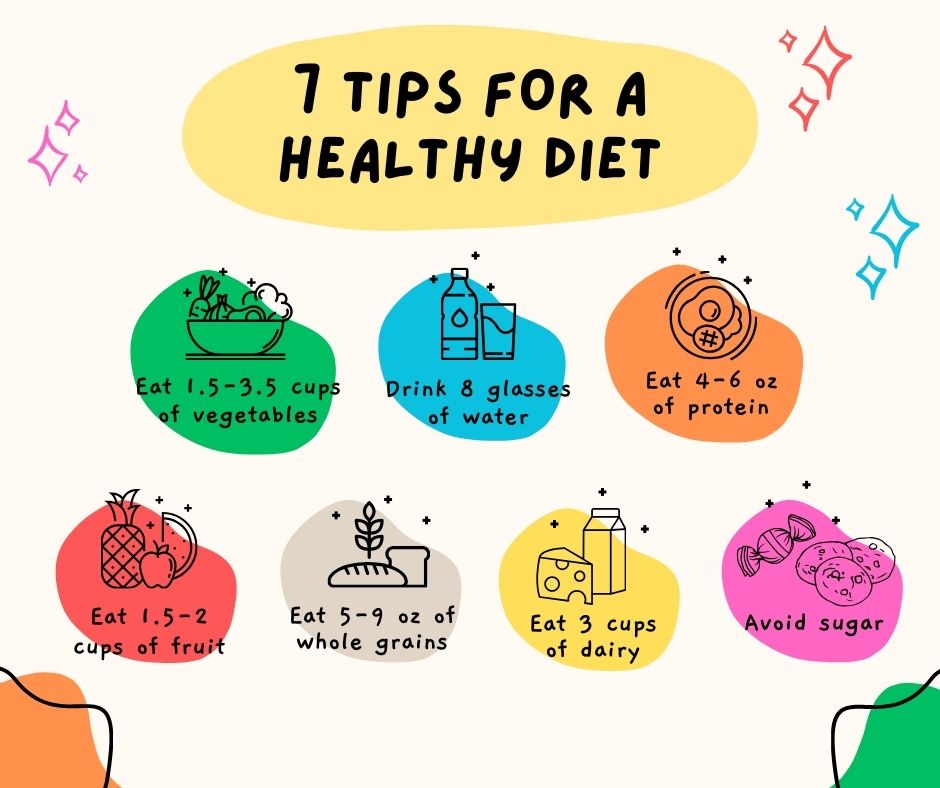
Focus on water. You may have heard that you need eight glasses, or 64 oz, of water each day to keep hydrated. That’s a good baseline, but it does vary. If you weigh over 130 lbs, exercise a lot, and/or live in a hot and/or dry environment, you are likely to need more water.
Tips: If you aren’t drinking at least eight glasses of water per day, work towards that goal. Avoid drinks with high amounts of sugar.
Fruits and Vegetables: Eat More
Kids 9- to 13-years-old should consume between 1.5 to 3.5 cups of vegetables per day, and 1.5 to 2 cups of fruit. That’s more than most people (including adults) probably consume. (And it does not include starchy vegetables such as potatoes and corn!)
Most of us fall short in this area because instead of snacking on those healthy options, we grab processed food like chips and cookies.
Tips: Include fruit in your breakfast, and vegetables in lunch and dinner to give you a base. Keep some easy-to-eat fruits and vegetables available for snacking. It helps to take advantage of fruits and vegetables that are in season. Remember, variety is important!
Grains: Go for the Whole Stuff
White foods, including rice, bread, pasta, and crackers, tend to be high in sugar. Whenever possible, choose whole grain options. Oatmeal, popcorn, and brown rice are good options. The target range for kids is 5 to 9 ounces.
Tip: Whenever you have a choice, choose the healthier whole grain option for your breads and starches.
Dairy: Fat or Non-fat?
This category includes milk, yogurt, and cheese. Aim for about three cups of dairy each day. There are still a lot of recommendations out there that these should all be low-fat or non-fat, but some studies are suggesting that whole milk/higher fat options are not unhealthy and may even have some benefits, depending on the child’s age and health.
Tip: Do some research and talk to your doctor about the best options. In the meantime, aim for those three cups per day.
Protein: A Tissue-Builder
Protein builds, maintains, and replaces the tissues in your body–in your muscles, your organs, and your immune system. It is critical to healthy growth, and it comes from more than just steak and burgers. Eggs, fish/seafood, lean meat, legumes, nuts, poultry, pork, and seeds all provide the protein you need. Your goal in this range is 4 to 6.5 ounces.
Tip: Nuts, legumes, and seeds can be an easy snack and help you reach your target intake of protein.
The Big Tip
Pre-packaged foods are typically full of chemicals and ingredients (such as sugar) that aren’t useful to your body and in some cases can cause harm when consumed in large quantities. Whenever possible, make food from scratch—even your cookies!
Bonus: Oatmeal-Banana Snacks
Want a healthy sweet snack? Here’s a quick, simple recipe:
1 over-ripe banana
1 cup oatmeal
1 tsp cinnamon (optional)
Preheat the oven to 350 degrees. Mash the banana and stir in the oatmeal. Add cinnamon, if desired. Shape into balls and press to flatten slightly. Bake at 350 degrees for 15 minutes. Makes about 8 snacks.
For more information about nutrition and healthy diets for youth, visit:
https://www.who.int/news-room/fact-sheets/detail/healthy-diet