Author: Kay@WARRENCOALITION.ORG

  • Member Profile: Family Preservation Services

    Member Profile: Family Preservation Services

    Family Preservation Services (FPS) focuses on developing community-based services that vary based on the individual community’s needs. These include services for children and adolescents, adults, and families, all of which address needs and concerns in psychiatric care, substance misuse, trauma, mental health, or behavior. The services range from group therapy, prosocial skills development, individual and family psychotherapy, to art therapy and parent support and education.

    The settings in which FPS provides this wide array of services are as unique as the families they serve. From intensive in-home services and therapeutic day treatments to outpatient counseling and crisis intervention, FPS excels at meeting families where they are. Their goal is to best serve the family’s needs, according to the strengths of the family and existing community resources, in combination with the expertise provided by the FPS staff.

    FPS, which is recognized by the National Council on Behavioral Health as a Trauma-Informed Organization, approaches all of this with a Trauma-Informed Care perspective “that emphasizes physical, psychological, and emotional safety for both providers and survivors while creating opportunities for survivors to rebuild a sense of control and empowerment” (https://fpscorp.com/about).

    Multi-systemic Therapy is an evidence-based program, an ecological approach, which can sometimes appear contrary to “common” knowledge, according to Alexia Rosen, Regional Director for the Winchester, Staunton, and Covington districts. For example, if a teen is perceived as having a substance use disorder, the initial reaction of most people is to get them into a treatment program. That is not, however, what FPS does.

    Alexia explained, “We’re still going to meet with the parents, we’re still going to work on their environment, we’re still going to work on how they are getting the drugs. [We’re going to focus on] getting them positive peer interactions, getting them involved in pro-socials. The more often we get kids involved in positive activities, the less likely they are to use drugs.” She said most kids do not have an actual addiction to overcome, but if FPS staff find that is the case, they do treat the substance use disorder.

    The focus on the environment, social skills, and community engagement are a result of FPS’s founding mission to keeping kids in their community. Alexia noted that kids sent to juvenile detention or put into outpatient group therapy for drug use often make the contacts they need to increase their use. Focusing on improving their home life, and developing skills in coping, decision-making, problem-solving, and communicating, among others, have a far more positive and long-lasting impact.

    Because FPS tailors what they offer based on the needs and resources within the community, the organization is continuously evaluating the needs of the community and adjusting the programs. “What we were doing when I joined FPS in 2007 and what we do now are totally different,” Alexia said. “We have our same agenda, but how we do it or what services we’ve added or what we’ve decreased in, has changed.”
    Family Preservation Services
    Alexia Rosen LPC
    Winchester Regional Director
    3363 Shawnee Drive Suite 1
    Winchester VA 22602
    Phone: 540-535-0043
    Staunton Regional Director
    246 Rolla Mill Rd.
    Verona, VA 24482
    Phone: 540-248-5510
    Email arosen@FPSCorp.com
    Website: https://fpscorp.com

    Alexia is a strong believer in community service and involvement, a value she has worked to instill in her employees. In addition to being an active supporter of the Coalition, she and her team participate in community events such as the Suicide Prevention Walk hosted by Shenandoah University. That focus is one of the many reasons she is currently serving as the president of the Warren Coalition.

    “We’ve been invested in Warren County since way before I was a part of FPS,” Alexia said. “I think it’s important to be a part of Warren Coalition because of how it helps our community.”
  • Trauma-Informed Training, Feb. 11th & 18th

    Do you ever feel as if you aren’t enough?

    Do you get frustrated, but don’t understand why?

    This training introduces CRI’s capacity-building framework for building resilience.

    Learn the science behind how trauma impacts the mind, emotion, and body, and its potential lifelong effects.

    Learn skills to diffuse difficult situations.

    Become aware of the impact trauma can have and how to avoid re-traumatizing someone.

    February Trauma Informed Training

    • Friday, February 11, 10:00 am-12:30 pm
    • Friday, February 18, 10:00 am-12:30 pm

    Both classes are required for a trauma-informed certification.

  • REVIVE! Training January 28, 2022

    REVIVE! Training January 28, 2022

    The Northwestern Prevention Collaborative is partnering with Northwestern Community Services Board to provide a series of Virtual REVIVE trainings for our community. Register for an upcoming event and become part of our lifesaving network of individuals. Everyone has a role in creating a safe, resilient community!

  • Member Profile: Front Royal Police Department

    Member Profile: Front Royal Police Department

    Front Royal Police Chief Kahle Magalis and his department are kept busy in our small town of just over 15,000 people. In 2020, the department received 15,025 calls for service, including both emergency and non-emergency requests for service.

    The Department’s mission is “Safeguarding lives in our community through selfless service to others and the unwavering pursuit of justice for those in need.” Their vision “is to be regarded by our community and our profession as a proactive, professional and premier law enforcement agency in the Shenandoah Valley as well as the Commonwealth of Virginia.”

    Chief Magalis, who assumed the duties of Chief of Police for the Front Royal Police Department in 2017, strives to create a positive working atmosphere for the people in his department, and to work with the community for the benefit of all. The core values of fortitude, respect, professionalism, and dedication drive the department towards their vision and guides them in their mission.

    The Department has six major divisions, with specialized personnel contained within each one.

    • The Patrol Division hosts those patrolling in marked and unmarked vehicles, on motorcycles and bicycles, and on foot. It also includes the part-time school crossing guards.
    • The Criminal Investigations Division consists of Criminal, Narcotic and Gang Detectives. The Criminal Division handles investigations and interviews/interrogations for a variety of offenses, including fire, homicide/death, and sexual assault. They also handle evidence collection and conduct background investigations. The Narcotics Division works with the Northwest Virginia Regional Drug Task Force, which is comprised of the Front Royal, Winchester, Luray, and Strasburg Police Departments, the Frederick, Clarke, Shenandoah, and Page County Sheriff’s Offices, and the Virginia State Police. They work with Federal partners including the DEA, ATF, and FBI to target mid and upper-level narcotics dealers.
    • Specialty Units include the Emergency Services Team (selected officers highly trained for high-risk situations) and the Crisis Negotiation Team (selected officers trained in proven negotiation tactics).
    • Services include the Communications Officers who staff a 24-hour, 7-day/week center handling over 20,000 calls per year, including phone calls, 911 calls, and walk-ins. Services also includes the Records Division (the point of contact for all FOIA requests) and the Evidence Division.
    • The Front Royal Police Department’s K-9 Unit provides support with highly mobile, specially trained police service K9’s. Currently they have one patrol K9 that is certified for apprehension work. Due to recent legislation, the narcotics K9 program is suspended as we work to identify funding for a new K9 that is trained in narcotics detection that is not imprinted on the odor of marijuana which has now been legalized in the Commonwealth of Virginia.

    “The Front Royal Police Department chooses to be a member of the Warren Coalition because we believe in their mission to promote safety and health within our community, particularly, our youth population,” Magalis said. He added that the Front Royal Police Department brings to the Coalition the perspective of law enforcement and public safety.

    The Front Royal Police Department is also a part of the Front Royal/Warren County Drug Prevention Committee that is working toward bringing treatment services and a Drug Court to our community.

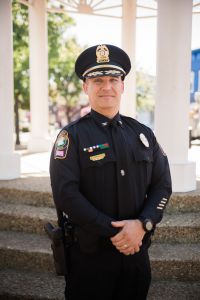
    Chief Kahle Magalis
  • Recovery Ally Training January 26, 2022

    Recovery Ally Training January 26, 2022

    Sponsored by the Northwestern Prevention Collaborative. Recovery Ally Programs are trainings that are designed to increase a community’s recovery capital, decrease stigma and grow intervention skills. The next session of this training will be held virtually on January 26, 2022 from 1 – 4 pm. This training is a 3-hour training developed at Virginia Commonwealth University to train faculty and staff to become Recovery Allies.

    Individual modules include:

    • Basic Science
    • What does an Ally Do?
    • Racial Justice and Recovery
    • Philosophies of Care & Pathways to Recovery, Families, and Language.

    This training is very interactive and is meant to provide a great starting point to supporting people struggling with substance use disorders.

    Audience

    All are welcome. This training is a very helpful primer as a family member, lay person, friend, employer, health care provider etc. For people with limited exposure to treatment or recovery, it can provide some great starting points. For professionals or people with a great deal of lived experience, it will provide a set of slides, tools and approaches that may be helpful with clients or family members or may provide an easy way to train community members to be part of the solution. Because the training is conversation driven, professionals can often be particularly helpful to other participants during the training.